

A Muktinath Motorbike Tour stands out as one of the most thrilling high-altitude motorcycling adventures in all of Asia. Crossing from the subtropical green valleys of Pokhara to the dry, windswept trans-Himalayan desert of Mustang, this ride delivers raw mountain scenery, intense off-road terrain, and deep cultural heritage. Over seven action-packed days, we trace roughly 850 kilometers of sweeping asphalt curves, loose riverbed gravel, and cliffside dirt tracks carved directly into the Himalayan rock.
Riding through the Kali Gandaki Gorge—flanked by the massive snow peaks of Mt. Dhaulagiri (8,167 m) and Mt. Annapurna I (8,091 m)—places you right between two of the world’s highest mountain giants. From the subtropical humidity of Kathmandu to the sacred alpine height of Muktinath at 3,800 meters, this journey tests your riding skills while rewarding you with unmatched vistas. Whether you tackle these trails on a rugged dual-sport machine or a classic Royal Enfield, our comprehensive itinerary review provides the practical knowledge you need for a safe and unforgettable Himalayan expedition.
Key Trip Highlights at a Glance
| Category | Trip Details |
| Total Distance | Approximately 850 km (Round Trip Loop) |
| Duration | 7 Days / 6 Nights |
| Maximum Elevation | 3,800 meters (Muktinath Temple Complex) |
| Terrain Profile | 50% Paved Highway, 50% Off-Road Dirt, Gravel, & Riverbeds |
| Skill Requirement | Intermediate to Advanced Off-Road Motorcycle Handling |
| Key Attractions | Kali Gandaki Gorge, Marpha Apple Orchards, Kagbeni Gateway, Muktinath 108 Spouts, Tatopani Thermal Hot Springs |
| Best Seasons | Autumn (September–November) & Spring (March–May) |
Detailed Day-by-Day Itinerary
Day 1: Kathmandu to Pokhara – Escaping the Capital Valley
- Distance: ~200 km
- Duration: 6–7 hours
- Terrain: Paved highway with heavy urban traffic near city exits
Our adventure starts at early dawn in Kathmandu. Getting an early start is non-negotiable if you want to clear the notorious Nagdhunga Pass before morning rush-hour traffic grinds movement to a standstill. Once past the valley rim, the Prithvi Highway drops rapidly toward the roaring Trishuli River.
The road winds alongside lush terraced mountainsides and vibrant rural settlements. You will pass colorful suspension bridges stretched across turquoise waters and roadside stalls steaming with hot milk tea. Maintain a steady pace along the sweeping asphalt curves, keeping a sharp watch for local buses and oncoming freight trucks on blind turns.
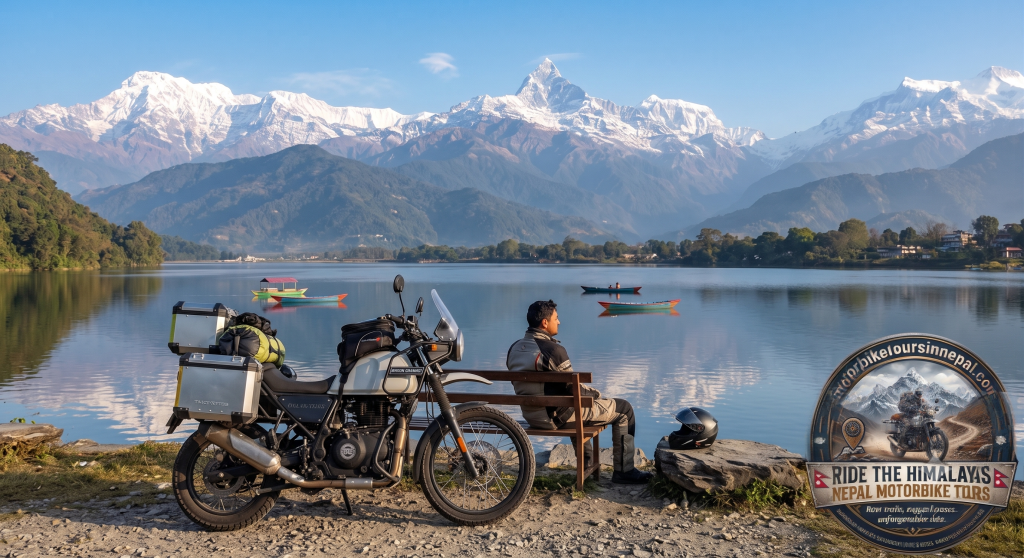
As we trace the Marsyangdi River further west, the valley opens up, revealing clear views of the Annapurna range on clear days. By late afternoon, we roll into the tranquil lakeside city of Pokhara. Park your bike along the shore of Phewa Lake, order a hot meal, and get ready for the mountains ahead.
Rider Tip: Spend your evening along Lakeside Pokhara doing a complete mechanical check on your motorcycle. Adjust your drive chain tension, check tire pressures, and confirm all luggage straps are tight before leaving paved roads tomorrow.
Day 2: Pokhara to Tatopani via Beni – From Smooth Tarmac to Raw Off-Road
- Distance: ~110 km
- Duration: 5–6 hours
- Terrain: Smooth highway transitioning into rough dirt, loose rocks, and mountain mud
Fire up your engine early to catch the dawn light striking Machhapuchhre (Fishtail Peak) as we ride along the Baglung Highway. The initial two hours offer smooth tarmac and fast, flowing corners through green valley foothills.
Your last major touchpoint with modern infrastructure is the bustling town of Beni. Stop here to top up your fuel tank to maximum capacity. Past Beni, the asphalt ends abruptly, replaced by the rugged dirt track that enters the lower stretch of the Kali Gandaki Gorge.
The trail transforms into a raw cliffside shelf carved directly into vertical rock walls. Cascading waterfalls spill directly onto the track, creating muddy patches and slippery wet rock slabs. Stand up on your footpegs to absorb the bumps as you trace the churning river below. By late afternoon, we arrive in Tatopani, where natural thermal hot springs sit along the riverbank—the ultimate cure for sore muscles after your first day off-road.
Day 3: Tatopani to Marpha and Kagbeni – Entering the Himalayan Rain Shadow
- Distance: ~75 km
- Duration: 5 hours
- Terrain: Rocky riverbeds, mountain gravel, and dry sand tracks
Leaving Tatopani behind, the gorge narrows dramatically. We are now riding through the absolute deepest canyon on Earth, squeezed between Dhaulagiri to your left and Annapurna I to your right. Stop briefly at Rupse Waterfall to watch the thundering water plunge over massive rock drops before continuing the steady climb toward Kalopani.
Near Kalopani, the surrounding environment undergoes a dramatic shift. Dense green pine forests thin out rapidly, giving way to the dry, wind-swept Himalayan rain shadow. The air turns cool and crisp, and the valley floor widens into expansive gravel flats.
By midday, ride into Marpha, famous across Nepal for its stone-paved alleys, whitewashed mud homes, and extensive organic apple orchards. Grab a plate of fresh local apple pie before pushing forward through Jomsom toward Kagbeni.
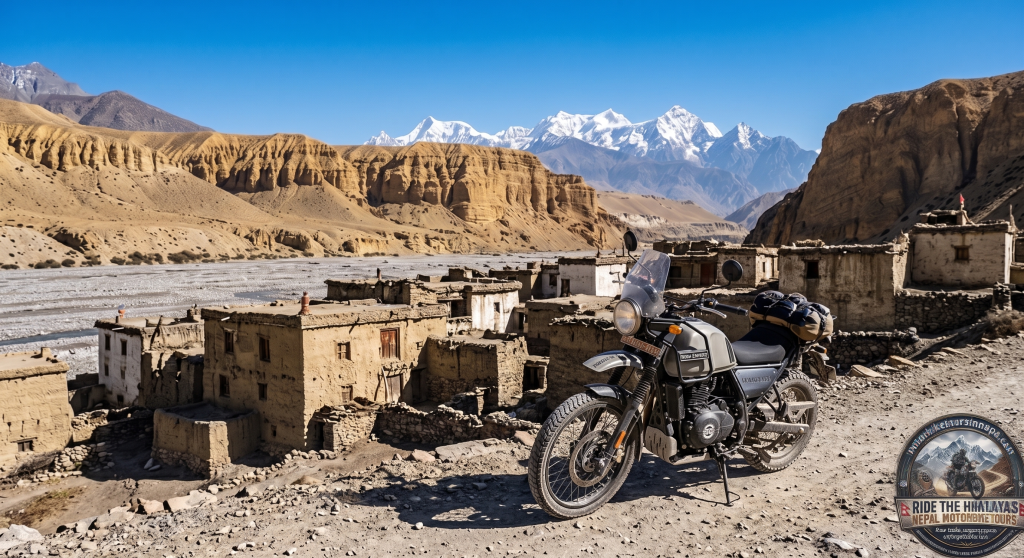
Arriving in Kagbeni (2,804 m) feels like stepping back into medieval times. This ancient settlement serves as the formal gateway to Upper Mustang. Explore its 500-year-old red monasteries and narrow mud-brick tunnels while taking in views of the Thorong Peak rising in the distance.
Day 4: Kagbeni to Muktinath – The Sacred Mountain Summit
- Distance: ~20 km
- Duration: 1.5 hours riding + full afternoon exploration
- Terrain: Steep paved switchbacks with dry gravel shoulders
The morning air in Kagbeni carries a cold alpine bite. Mount your bike for a short but steep climb up to Muktinath (3,800 m). This section features smooth paved switchbacks winding up dry, copper-colored mountain slopes under intensely blue skies.
As you ascend, the views across the Mustang valley expand, displaying Mt. Dhaulagiri and Nilgiri in full panoramic glory. Upon reaching the village of Ranipauwa at the base of Muktinath, park your motorcycle at the designated lot and complete the short walk up to the sacred Muktinath Temple complex.
Muktinath holds immense religious importance for both Hindus and Buddhists. Observe devout pilgrims standing beneath the 108 brass water spouts shaped like bull heads, taking ritual baths in freezing mountain water. Step inside the nearby Jwala Mai Temple to see the natural underground gas flame burning continuously beside a flowing water spring.
Spend your afternoon taking in high-altitude silence, photographing prayer flags fluttering against snow-capped peaks, and enjoying warm local tea at a high-elevation guesthouse.
Day 5: Muktinath to Tatopani – Riding the River Bed Downward
- Distance: ~100 km
- Duration: 6 hours
- Terrain: Downhill mountain dirt tracks, loose gravel, and river sand
Start your descent early to beat the ferocious crosswinds that blast up the Kali Gandaki Valley every day after 11:00 AM. Riding down from 3,800 meters back toward the canyon floor requires disciplined throttle control and active engine braking to conserve your brake pads.
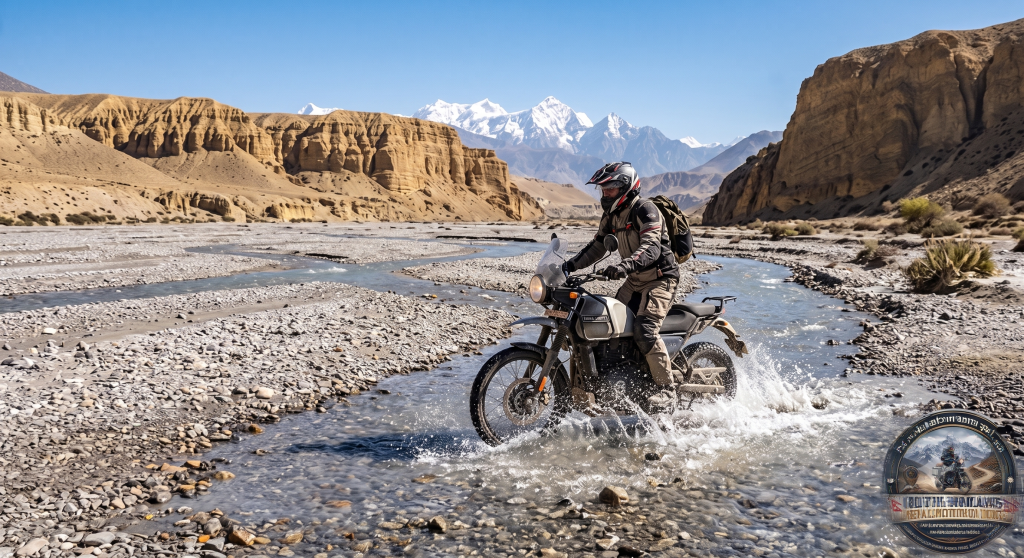
Near Jomsom, take your bike onto the wide, flat riverbed gravel. Keep your eyes peeled on the dry river flats—this is where locals and travelers search for Shaligrams, ancient black ammonite fossils that are millions of years old and considered sacred manifestations of Lord Vishnu.
As we lose altitude, the cold dry desert air shifts back into warm, oxygen-rich mountain breezes. By late afternoon, we cross back into Tatopani. Park your motorcycle, stretch out your legs, and spend another relaxing evening soaking in the natural hot springs along the river edge.
Day 6: Tatopani to Pokhara – Rejoining the Valley Flow
- Distance: ~110 km
- Duration: 5 hours
- Terrain: Off-road dirt transitioning to paved highway
Leaving Tatopani behind, trace the winding dirt trail back toward Beni. Cross long suspension bridges hanging high above roaring blue rivers, taking care over wooden planking and metal expansion joints.
Once you hit the asphalt past Beni, the violent vibration of off-road riding subsides into smooth, relaxed cruising. The heavy trail dust of Mustang stays behind as we re-enter the clean, sub-tropical air of the Pokhara Valley.
Arrive in Pokhara by mid-afternoon. After checking into your hotel and giving your motorcycle a quick wash to remove thick mountain dust, celebrate your successful mountain loop. Enjoy a fresh lakeside dinner by Phewa Lake paired with live acoustic music at a local venue.
Day 7: Pokhara to Kathmandu – Completing the Himalayan Loop
- Distance: ~200 km
- Duration: 6–7 hours
- Terrain: Paved national highway
The final leg of our journey returns along the Prithvi Highway back toward the capital city. Ride at a steady pace, enjoying the final views of green hillsides, river rapids, and roadside mountain towns.
Reaching Nagdhunga Pass by late afternoon signals your return to the Kathmandu Valley. Safely complete your 850-kilometer expedition across Nepal’s most legendary mountain terrain with unforgettable memories of raw high-altitude adventure.
Practical Travel Tips for Your Muktinath Motorbike Tour
Planning a Himalayan ride requires precise preparation. Here is what you must keep in mind before setting out on your motorcycle adventure:
Best Seasons to Ride
The absolute best months for a Muktinath Motorbike Tour are during Autumn (September to November) and Spring (March to May). Autumn offers crystal-clear skies, minimal rain, and crisp mountain views right after the monsoon season clears. Spring brings warmer temperatures and blooming rhododendron forests along the lower elevation hillsides.
Avoid the monsoon months (June to August), as heavy rains trigger severe landslides along the Kali Gandaki Gorge and turn dirt tracks into thick, treacherous mud.
Required Permits
Riders must secure two primary permits before heading toward Mustang:
- ACAP (Annapurna Conservation Area Project) Permit: Required for entry into the Annapurna protected zone.
- TIMS (Trekkers’ Information Management System) Card: Mandatory tracking permit for safety oversight across mountain routes.
Ensure you carry multiple physical copies of your permits, passport, and driver’s license, as you will present them at mandatory police checkpoints in Birethanti, Tatopani, and Kagbeni.
Recommended Motorcycles & Mechanical Setup
The rugged terrain of Mustang demands a durable dual-sport or adventure bike. Ideal choices include:
- Royal Enfield Himalayan 411 / 450: Excellent torque, comfortable dual-up seating, and rugged suspension.
- Honda CRF 250 / 300 Rally: Lightweight, nimble, and ideal for deep gravel and steep mud tracks.
- 200cc+ Dual-Sport Motorcycles: Any well-maintained dual-sport bike with high ground clearance will handle the terrain.
Rider Tip: Equip your bike with high-grade handguards, heavy-duty engine bash plates, and aggressive dual-purpose knobby tires (70/30 off-road bias recommended) to maintain grip on loose river gravel.
Essential Packing & Preparation
Packing light while staying fully prepared is the key to managing dynamic weather changes in the Himalayas.
- Riding Gear: A high-quality full-face helmet, a four-season riding jacket with removable thermal and waterproof liners, armored riding pants, waterproof dual-sport boots, and two pairs of gloves (warm weather + heavy thermal/windproof).
- Tools & Spares: Carry spare inner tubes, a compact 12V or hand air pump, tire irons, heavy-duty chain lube, spare clutch/throttle cables, extra engine oil, zip ties, and quick-drying epoxy putty for crankcase repairs.
- Hydration & Health: High altitude combined with dry mountain winds causes rapid dehydration. Carry a 2-liter hydration bladder, sunblock (SPF 50+), lip balm with UV protection, and basic altitude sickness medication (such as Acetazolamide).
Conclusion & Final Verdict
Completing a Muktinath Motorbike Tour is far more than an ordinary motorcycle road trip—it is an extraordinary passage through extreme geography, ancient cultures, and mountain landscapes. From the fast-flowing curves of the Prithvi Highway to the high-altitude trails of Kagbeni and Muktinath, every kilometer delivers pure adventure.
If you are ready to test your off-road skills against the towering backdrop of Dhaulagiri and Annapurna, start planning your Himalayan ride today.