

The Nepal Terai Motorbike Tour provides an extraordinary ride through a region of the Himalayan nation that few international motorcyclists ever experience. While most adventure riders head straight into the high-altitude dirt tracks of Mustang or Annapurna, descending into Nepal’s southern lowlands opens up an entirely different world. Here, dense subtropical sal jungles replace frozen granite peaks, wild one-horned rhinos cross quiet forest tracks, and ancient spiritual landmarks ground thousands of years of history.
This 8-day motorcycle circuit guides you across Nepal’s flat southern belt—known locally as the Terai—where long stretches of open asphalt meet untouched wilderness. You will twist through dramatic mountain descents out of Kathmandu, cruise along the smooth ribbon of the Mahendra Highway, track wild Bengal tigers on foot, and park your bike beside the sacred birthplace of Lord Buddha.
Whether you pilot a rugged Royal Enfield Himalayan, a nimble dual-sport machine, or a twin-cylinder touring bike, this itinerary delivers an ideal balance of fast highway riding, gravel jungle trails, and rich cultural immersion.
Key Trip Highlights at a Glance
| Day | Route Breakdown | Distance | Key Highlights |
| Day 1 | Kathmandu to Chitwan | 160 km | Trisuli River gorge, descent to plains, Tharu cultural village |
| Day 2 | Chitwan to Kohalpur | 290 km | Long-haul cruise on the Mahendra Highway, open canopy roads |
| Day 3 | Kohalpur to Bardia (Thakurdwara) | 90 km | Rural farmland riding, entry into deep subtropical sal forest |
| Day 4 | Bardia National Park | Safari Day | Jungle walking safari, tiger tracking, Babai River wildlife watch |
| Day 5 | Bardia to Chisapani & Return | 60 km | Cable-stayed Karnali Bridge, freshwater dolphin search, local trout |
| Day 6 | Bardia to Lumbini | 280 km | Smooth lowland tarmac, sacred grounds of Maya Devi Temple |
| Day 7 | Lumbini to Daman | 190 km | Mountain climbs, tight hairpins, panoramic Himalayan views |
| Day 8 | Daman to Kathmandu | 80 km | Winding mountain ridge descent back into the Kathmandu valley |
Why Choose the Nepal Terai Motorbike Tour?
Most riders imagine Nepal exclusively as steep mountain passes and thin air. However, a Nepal Terai Motorbike Tour showcases the startling diversity of the country within a single week.
Leaving the high-elevation chill behind allows you to ride in warm, comfortable weather for most of the year. The southern roads give you a chance to twist the throttle on long, sweeping stretches of pavement, contrasting sharply with the slow, technical gear-crunching required in the high Himalayas. Additionally, combining motorcycling with authentic wildlife safaris offers an adrenaline rush that few standard adventure routes can match.
Detailed Day-by-Day Itinerary
[IMAGE SUGGESTION: A fully equipped adventure motorcycle parked on the side of a jungle road lined with tall sal trees | Recommended Alt Text: “Nepal Terai Motorbike Tour rider taking a break on a jungle highway”]
Day 1: Kathmandu to Chitwan National Park (160 km)
Your expedition starts by cutting through the chaotic morning traffic of Kathmandu, climbing up to the pass at Nagdhunga before dropping sharply down the winding Tribhuvan Highway. The descent offers spectacular views of deep river valleys as you follow the roaring Trisuli River.
As you reach Mugling, you turn south along the Narayani River, watching the steep mountain walls flatten out into broad, sunlit plains. The air turns noticeably warmer and denser as you enter the Terai. By late afternoon, you arrive in Sauraha, the main gateway to Chitwan National Park.
- Riding Terrain: Winding mountain twisties transitioning into smooth, flat river plains.
- Must-Try Food: Freshly fried riverside river fish at a roadside stall near Malekhu.
- Evening Vibe: Sunset drinks along the Rapti River, keeping an eye out for rhinos coming down to drink.
Quick Tip: Nagdhunga pass can bottleneck heavily with truck traffic early in the morning. Aim to clear the valley rim before 7:00 AM to enjoy clear roads down the mountain.
Day 2: Chitwan to Butwal & Kohalpur (290 km)
Set your tire pressures for long asphalt stretches because Day 2 is all about the open road. Leaving Chitwan, you connect directly with the Mahendra Highway (East-West Highway), the primary artery spanning the entire width of Nepal.
This stretch of road cuts straight through dense teak and sal forests. The smell of warm pine and eucalyptus fills your helmet as you maintain a steady cruising speed. Passing through the bustling trade city of Butwal, you cross expansive dry riverbeds over multi-span bridges before sweeping further west toward Kohalpur.
- Riding Terrain: Long, flat stretches of tarmac with occasional bridge crossings and town bypasses.
- Highlight: The sheer freedom of cruising uninterrupted under green jungle canopies.
- Overnight: Comfortable city hotel in Kohalpur to rest after a full day in the saddle.
Day 3: Kohalpur to Bardia National Park (Thakurdwara) (90 km)
After the long highway leg of Day 2, today is a shorter, remarkably scenic ride into true wild country. You turn off the main highway and head northwest toward Thakurdwara, the village hub bordering Bardia National Park.
As you leave the main highway, asphalt gives way to packed gravel trails, red dust, and quiet rural lanes bordered by Tharu mud-brick houses with thatched roofs. Children wave from dusty yards, and herds of cattle move slowly along the verges. You are entering one of the most wild and remote national parks in Asia.
- Riding Terrain: Asphalt turning into hard-packed dirt roads and jungle tracks.
- Local Experience: Arriving at a quiet, eco-friendly jungle lodge nestled along the edge of the forest reserve.
- Internal Link Placeholder: To ensure your bike is ready for these gravel transitions, check out our
[Internal Link: "essential motorcycle rental options in Kathmandu" -> [motorbiketoursinnepal.com/motorcycle-rentals-kathmandu/](https://motorbiketoursinnepal.com/motorcycle-rentals-kathmandu/)].
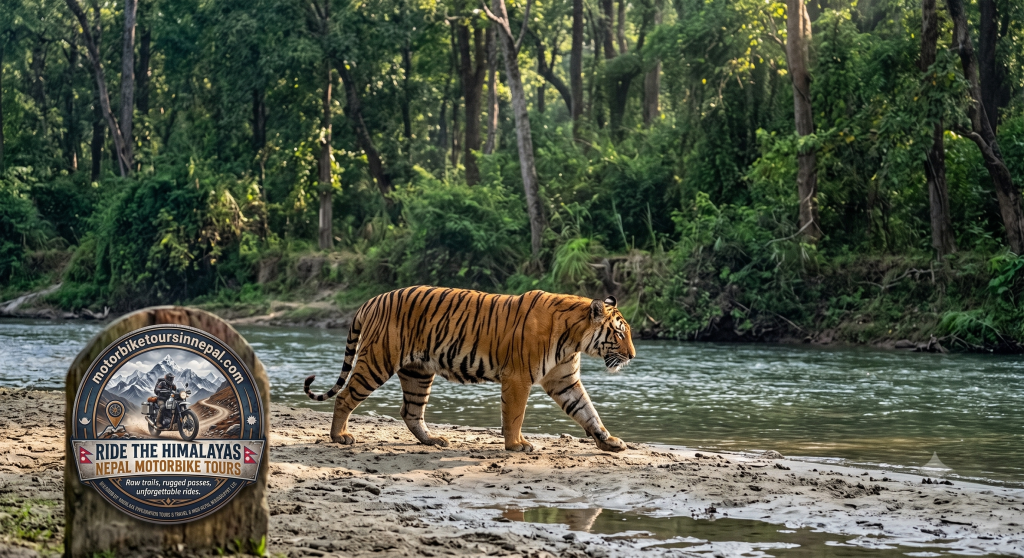
Day 4: Full Day Bardia Wildlife Safari
Park the motorcycle for the day, lace up your hiking boots, and step directly into the wild. Unlike Chitwan, which sees higher tourist numbers, Bardia remains pristine, quiet, and far less developed. Today is dedicated to a full-day guided walking safari.
Led by experienced nature guides, you quietly walk along dirt trails through tall elephant grass and dense sal woodlands. You will visit strategic observation towers (machans) and hideouts overlooking the Babai and Karnali rivers. Bardia boasts one of the highest densities of wild Royal Bengal Tigers in the world, along with wild Asian elephants, one-horned rhinos, and spotted deer.
- Activities: Morning and afternoon jungle walking safaris, riverbank watching, bird spotting.
- Sensory Details: The sound of rustling dry leaves underfoot, the sharp alarm call of a spotted deer signaling a predator nearby, and the cool morning mist rising off the river banks.
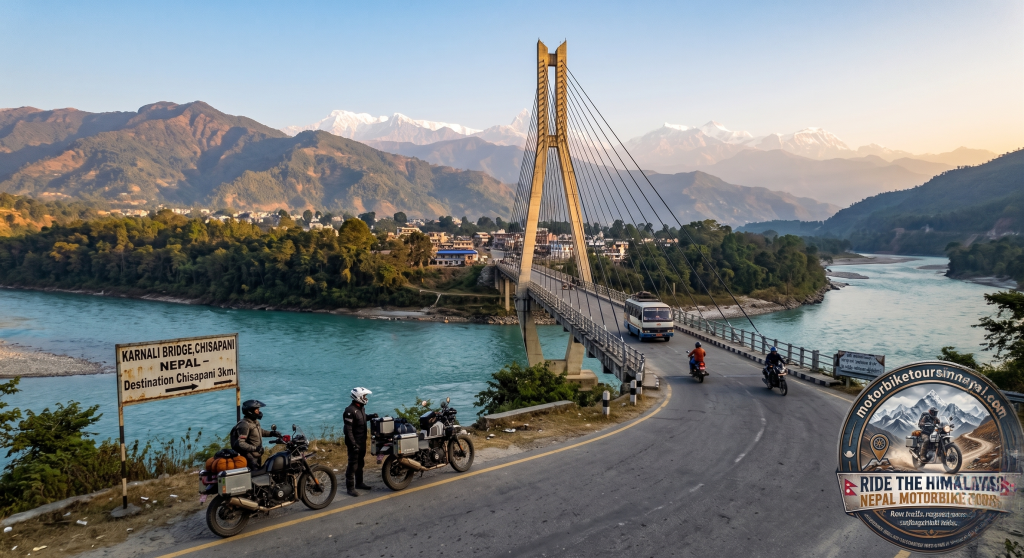
Day 5: Bardia to Karnali River Bridge (Chisapani) & Freshwater Dolphin Search (60 km)
After an intense day of tracking wildlife on foot, jump back on the bike for a short excursion west to Chisapani. This easy ride leads to the iconic Karnali River Bridge—a massive, single-tower cable-stayed bridge spanning the turquoise waters of Nepal’s longest river.
Chisapani is famous for its fresh river trout and sweeping views of the Karnali gorge where the river spills onto the plains. After riding across the bridge, take a boat trip along the quiet stretches of the river to search for the rare Gangetic freshwater dolphin.
- Riding Terrain: Easy, short highway link with light traffic.
- Highlight Crossing: Riding back and forth across the single-tower Karnali Suspension Bridge.
- Lunch Stop: Enjoy grilled river trout served with spicy local chutney at a Chisapani riverfront restaurant.
Day 6: Bardia to Lumbini Sacred Garden (280 km)
Turn your handlebars east as you point your motorcycle back across the Terai toward Lumbini, the birth site of Siddharta Gautama (the Buddha). The ride back along the Mahendra Highway feels swift and smooth, passing through peaceful rural settlements and vast rice paddies that stretch to the horizon.
By late afternoon, you arrive at the spiritual quiet of Lumbini. Park your bike near the Sacred Garden and explore the tranquil grounds housing the historic Maya Devi Temple, the Ashoka Pillar, and dozens of striking monasteries built by Buddhist communities from around the globe.
- Riding Terrain: Smooth, fast lowland highway.
- Cultural Experience: Walking barefoot around the sacred pond where Queen Maya Devi bathed before giving birth to the Buddha.
Day 7: Lumbini to Daman Hill Station (190 km)
It is time to leave the flat southern terrain and head back into the mountains. Riding northeast from Lumbini, you cross back through Butwal and begin your climb up the historic Tribhuvan Highway toward Daman.
This stretch of road is legendary among local motorcyclists. It snakes relentlessly up steep mountainsides with hundreds of continuous switchbacks, tight hairpins, and sharp elevation shifts. As you gain altitude, the tropical humidity melts away, replaced by crisp mountain air. Daman sits at an elevation of 2,322 meters, offering one of the broadest panoramic views of the Himalayan range in the entire country.
- Riding Terrain: Flat highway transitioning into steep, highly technical mountain switchbacks.
- Scenery Shift: Green banana groves give way to towering pine trees and chilly mountain breezes.
Day 8: Daman to Kathmandu (80 km)
Wake up early to catch the sun rising over the Himalayas. On a clear morning, you can see an unbroken wall of white peaks stretching all the way from Dhaulagiri in the west past Mount Everest in the east.
The final day of riding is a thrilling 80-kilometer descent down the mountain ridge toward the Kathmandu valley. The road winds tightly through mountain hamlets, terraced farmlands, and pine forests before joining the main traffic flow back into the capital. You complete your epic loop with dirty boots, a warm engine, and memories of an extraordinary journey across the wild south.
- Riding Terrain: Descending mountain twisties followed by busy city traffic.
- Final Moment: Gathering with your riding crew over cold drinks in Thamel to swap stories from the road.
Customizing Your Nepal Terai Motorbike Tour
Every rider brings a unique style to the road. If you prefer more dirt-track exploration, you can add extra layover days in Bardia to complete multi-day jungle treks deeper into the Babai Valley. Alternatively, paved-road touring enthusiasts can extend the journey eastward from Lumbini toward Janakpur to visit the magnificent Janaki Temple before climbing back into the hills.
Practical Travel Tips & Insider Advice

Best Time to Ride
Planning your trip during the right weather window makes a huge difference in comfort and safety:
- Autumn (October to December): Peak riding season. Clear blue skies, minimal rain, comfortable daytime temperatures (20°C to 28°C), and excellent visibility for wildlife safaris.
- Spring (February to April): Great temperatures and lush vegetation. Wildlife spotting in Bardia and Chitwan is exceptional during these months as animals gather near remaining water holes.
- Monsoon (June to September): Avoid riding the Terai during these months. Heavy rainfall causes flash floods, muddy river crossings, high humidity, and poor road conditions.
Road Conditions & Riding Mindset
Riding the Terai requires a distinct riding mindset compared to high-mountain routes:
- Highway Speeds: The Mahendra Highway allows for higher speeds than mountain roads, but you must remain alert for stray livestock, slow-moving tractors, bicycles, and pedestrians crossing without warning.
- Dust and Heat: Southern Nepal can get warm and dusty. Keep a dark visor or quality sunglasses handy, along with a breathable dust buff for your neck and face.
- Jungle Trails: Riding into Bardia and Chitwan involves gravel, sand, and hard-packed dirt. Lower your tire pressures slightly when transitioning off the pavement to maintain traction.
Permits and Documentation
Make sure you carry all necessary documents in a waterproof pouch inside your tank bag:
- Valid International Driving Permit (IDP) alongside your home country motorcycle license.
- Vehicle Registration (Blue Book) if renting or riding locally.
- National Park Entry Permits for Chitwan and Bardia (these can be purchased at the park entrance gates).
Essential Packing & Preparation
Packing for a trip that covers both humid lowland jungles and chilly mountain heights requires a flexible layering strategy. Here is what should be in your luggage:
- Riding Gear: A multi-season textile jacket with removable waterproof and thermal liners. Breathable mesh jackets work best in the lowlands, while thermal inserts are essential when climbing up to Daman.
- Footwear: Sturdy, waterproof riding boots that offer ankle support on the bike and comfortable walking capabilities for wildlife safaris.
- Hydration Pack: A 2-to-3-liter hydration bladder worn under your jacket keeps you cool and hydrated during long, hot highway stretches.
- Tools & Spares: Carry a tire repair kit, a compact portable air compressor, extra inner tubes (if riding spoked wheels), clutch cables, and basic hand tools.
- Insect Protection: High-strength bug spray and lightweight long-sleeve cotton clothing for evenings around jungle lodges.
Conclusion & Final Verdict
The Nepal Terai Motorbike Tour proves that Nepal’s adventure potential extends far beyond its high snow peaks. Riding through the southern lowlands connects you with dense subtropical jungles, ancient spiritual sites, and warm local hospitality—all connected by long stretches of exhilarating highway.
From tracking wild tigers in Bardia to carving up the mountain switchbacks of Daman, this 8-day itinerary offers one of the most complete, varied motorcycling experiences in South Asia. Put on your helmet, prep your motorcycle, and experience the thrilling wild south of Nepal on two wheels.